
Disclaimer: Of course, I don’t think everyone has turned into a digital zombie. Many people use the internet constructively—to learn, work, and improve their lives. The problem isn’t the internet itself, but how it has been transformed into a massive machine designed to capture our attention, manipulate our behavior, and keep us hooked.
Why have we ended up like this? The answer is simple: it’s not an accident—it’s the result of a carefully engineered system designed to keep us glued to our screens.
Who Decides What We See? Algorithms and the Business of Distraction
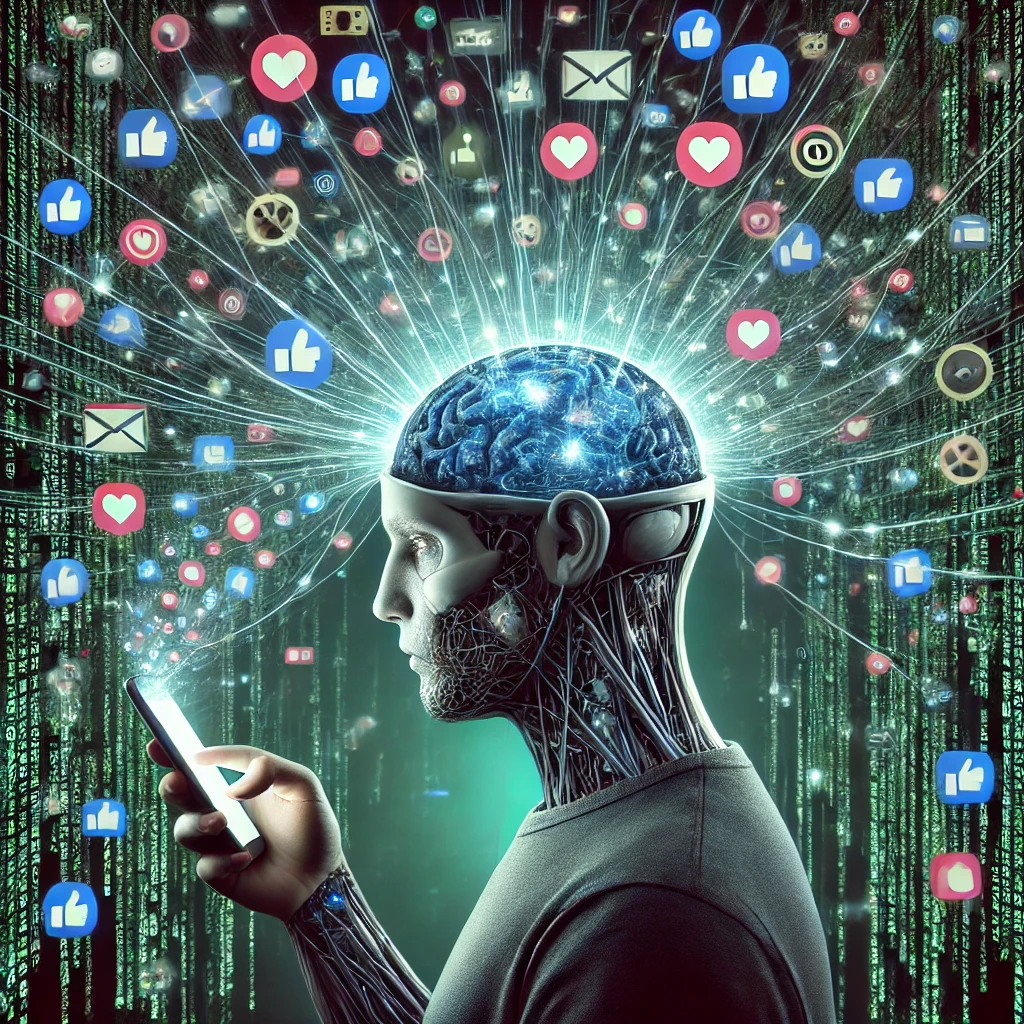
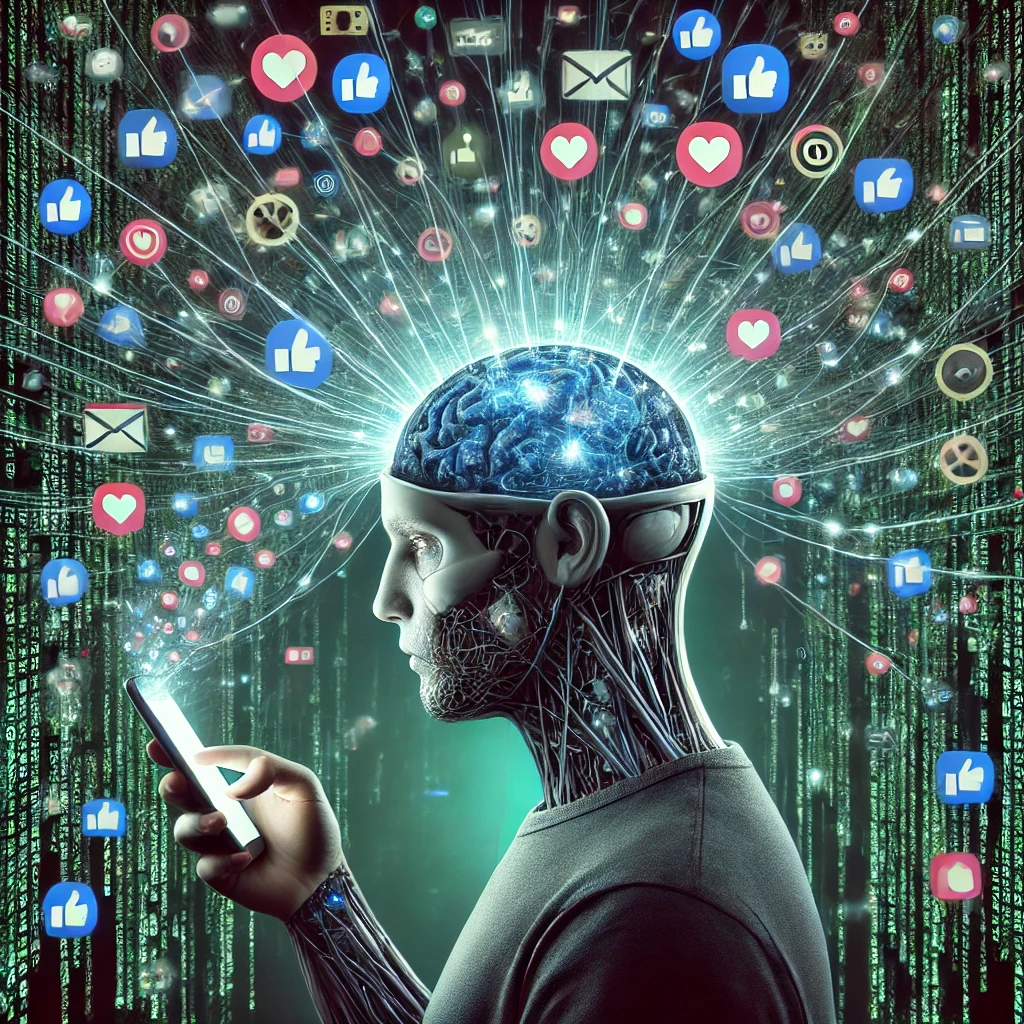
Think you choose what to watch online? Wrong. The algorithm does. That invisible force that decides which posts appear on your feed, which videos will make you laugh, and which content will make you angry.
Its goal? To keep you on your screen as long as possible.
The longer you stay online, the more ads you see. And the more ads you see, the more money these platforms make. You are the product in a system based on monetizing attention—the same system exposed in The Social Dilemma.
And how do they keep you there? By playing with your emotions.
📢 They show you content that sparks outrage—because anger makes you engage.
📢 They tailor your feed to make you believe everyone thinks like you.
📢 They push you to compare yourself to seemingly perfect lives, keeping you trapped in a loop of dissatisfaction.
The result? You become addicted—not just to social media, but to the emotions they trigger.
How Did We Become Digital Zombies?
Remember when people actually lived their lives? Went out with friends, read books, enjoyed a walk, and spoke with their voices—not in comment sections? No? Yeah, no one does.
Now, life is different. The day no longer starts with coffee, but with your phone. What if the world collapsed overnight? Better check. And if it didn’t… well, time to scroll through strangers’ breakfasts and the heated opinions of people convinced their views are essential to humanity.
Welcome to the digital circus, where attention is currency, and likes are worth more than real compliments.
How did the internet turn us into compulsive scrollers, unable to focus on a single thought?
Why Do We Check Our Phones Every 5 Minutes?
You only meant to check the weather. And now, 40 minutes later, you know everything about a Japanese grandma knitting sweaters for dogs and the latest influencer breakups.
How did this happen? Dopamine.
📢 “Someone liked your post!”
📢 “You have a new message!”
📢 “You’re missing out on a trending topic!”
Every notification is a small reward for your brain. A tiny hit of pleasure.
It’s like someone handing you a free gift every five minutes. And if it’s free, why not take it?
But the real kicker? Notifications work even when they don’t exist.
You check your phone just to see if something happened—when, in reality, nothing did.
Phantom vibrations are a scientifically studied phenomenon. People check their phones even when they haven’t buzzed. Why? Because our brains have been trained to expect constant stimulation.
Fragmented Thinking—Why Can’t We Focus Anymore?
People used to read 500-page novels. Now we struggle to finish a post longer than two sentences.
🎬 Videos over 15 seconds? Too long!
📚 Books? Just watch a summary on YouTube!
📖 Long articles? Skim the title and pretend you understood!
We’ve been conditioned to consume fast, digestible fragments of information. The deeper we sink into this rhythm, the harder it becomes to engage with anything that requires more attention than an Instagram caption.
Social media has rewired our brains. Now, we want everything instantly, and we no longer have the patience for deep thinking.
📉 In 2000, the average person could focus on a task for 12 minutes.
📉 Today? 90 seconds.
This is real data. And in 10 years? Will we be listening to podcasts at 3x speed and only understanding information in emoji form? Very possible.
Why Is Everyone Obsessed with Looking Perfect?
There was a time when people looked in the mirror and accepted their own reflection. Now, they look into their phone camera and see an enhanced version of themselves.
Ever noticed how every face on social media looks flawless? Zero imperfections. 70% of users under 25 edit their photos before posting them.
Once, people saw their real selves. Now, they see who they wish they were. But here’s the real problem: nobody wants to be seen as they actually are anymore.
Social media turned physical appearance into a competition.
Taking a photo isn’t enough. You have to be perfect. Otherwise, why post it?
And if, for once, we looked in the mirror without filters? We might actually realize we’re fine just the way we are.
Why Does Everyone Feel the Need to Comment on Everything?
You know how it goes. Whatever the topic, there’s always someone who “knows better.”
📌 Economy? “I read a tweet, let me explain how the euro works.”
📌 Politics? “I know nothing, but here’s my opinion.”
📌 Someone’s personal life? “They made the wrong choice; here’s what they should have done.”
Everyone has an opinion. Even when they have no idea what they’re talking about.
Once upon a time, people avoided speaking about things they knew nothing about. Now, social media has created the illusion of universal expertise.
All it takes is one viral post, and suddenly, you know more than a Nobel Prize winner.
“I know exactly how to run a country, cure cancer, and make the perfect lasagna!”
“Vaccines are bad—my neighbor’s cousin said so!”
But the truth is, people just don’t know when to shut up.
And Now?
We can’t focus anymore.
We check our phones 150 times a day.
We’re addicted to filters.
We comment on everything—even when we don’t know what we’re talking about.
But the worst part? We don’t even realize what’s happening to us.
Because we’re too busy scrolling.
The end. Now you can go back to TikTok.
ELIT Creative Connect
🌐 www.creativeconnect.it